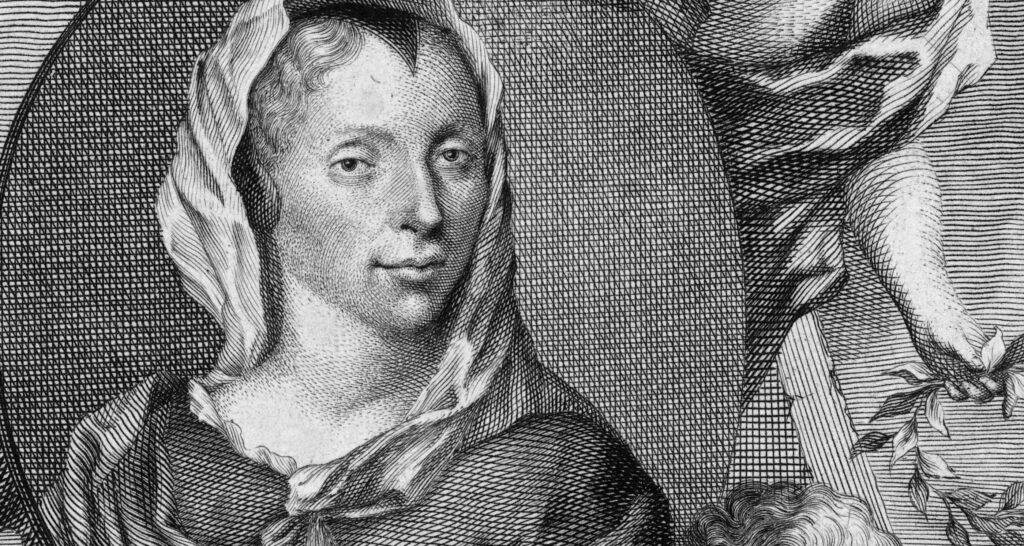
At the intersection of the 17th and 18th centuries, Dutch artist Johanna Koerten crafted a stunning artwork for the spouse of Emperor Leopold I, featuring silk embellished with floral designs, eagles, crowns, and botanical motifs. Biographer Arnold Houbraken noted that the empress invested no less than 4,000 guilders in the piece, a figure markedly greater than the 1,600 guilders Rembrandt earned for “The Night Watch” in 1642. Regrettably, Koerten’s masterpiece was lost over time, and her name remains less acknowledged today compared to her peers’.
This contrast between past renown and present invisibility was brought to light in the exhibition “Women Artists From Antwerp to Amsterdam, 1600–1750” arranged by the National Museum of Women in the Arts in Washington and the Museum of Fine Arts in Ghent, featuring approximately 150 works by 40 female artists.
Prominent figures such as Johanna Koerten, Judith Leyster, Clara Peeters, and Rachel Ruysch thrived in their era, with their creations being acquired, reviewed, and revered, some even drawing patrons from European royal families. Koerten was especially recognized for her detailed paper cuttings, though she also engaged with silk, wax, glass, and watercolor. Tsar Peter the Great visited her Amsterdam studio in 1697.
The exhibition highlighted how social standing and familial background greatly impacted women’s access to artistic education. Women from artistic households learned in the workshops of their fathers or brothers, while those from affluent families could afford private tutors. Conversely, many from less fortunate backgrounds were engaged in lace and textile manufacturing.
Certain female artists intentionally claimed their professional identity through self-portraits and signatures. Around 1630, Judith Leyster depicted herself assertively with brushes, symbolizing her professional confidence. She gained acceptance into the Guild of Saint Luke in Haarlem and taught her own pupils. Flemish sculptor Maria Faydherbe labeled some works with “Maria Faydherbe me fecit”—a rare practice when small wooden sculptures frequently lacked signatures. Maria Schalcken’s identity as an artist was restored when restorers discovered her name on a canvas once attributed to her brother, painter Godefridus Schalcken.
Women contributed not just as creators but also as engaged players in the art economy. Clara Peeters incorporated compositional elements across several still lifes, a method employed by numerous painters to generate and sell works more efficiently. Johanna Vergouwen replicated pieces by Rubens and Van Dyck for market export, with the practice of copying masterpieces being held in high regard at the time.
The exhibition also featured embroidery, lace, and paper cuttings—artistic pursuits later classified as “women’s work” and viewed as lesser in the hierarchy of the arts. However, these items were highly valued luxury goods during the 17th century.
The vibrancy of the art scene had a troubling side tied to colonial trade and slavery. Artist and naturalist Maria Sibylla Merian studied insects and plants in Surinam, a Dutch colony. Her findings were partly derived from enslaved individuals, whose contributions she recognized. Among their insights was the use of peacock flowers by some enslaved women to induce abortions, thereby preventing their offspring from entering into slavery.
Biographies from the period highlight the admiration held for female artists, as showcased in Houbraken’s “The Great Theatre of Dutch Painters and Paintresses,” where Anna Maria van Schurman is more prominently featured than Rembrandt. While this prominence does not unequivocally establish her as a superior artist, it does reflect her high standing.
In the 19th and 20th centuries, museums and historians placed greater emphasis on male-created paintings and sculptures, resulting in the overshadowing of women’s contributions. Textiles suffered degradation over time, and some paintings by women were misattributed to male artists, not due to a deficiency in talent but because later generations influenced the narrative of art history through their selections of what to retain and exhibit.


